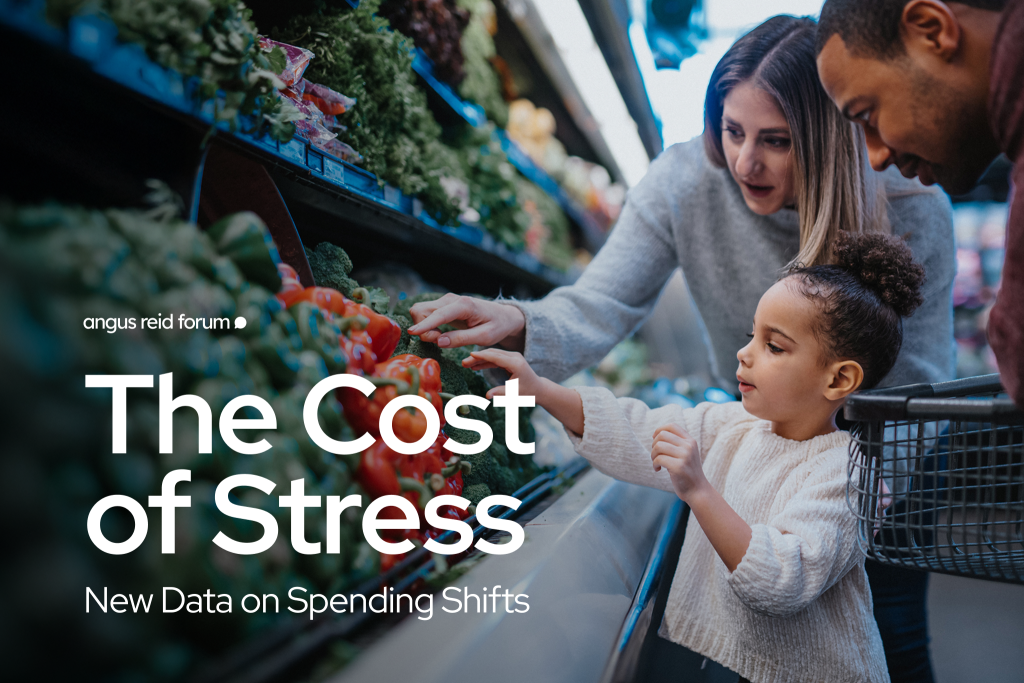
There’s a sense of unease running through everyday life in the U.S. right now. It shows up in the way people talk about money, how closely they follow political decisions, and the caution creeping into once-routine spending choices. New research from Angus Reid Forum USA suggests this isn’t just a momentary dip in confidence—it’s a sustained emotional shift with real consequences for how Americans behave as citizens and consumers.
Trade Talk Goes Mainstream
Trade policy has become a focal point of that anxiety. Issues like tariffs, once relegated to economic briefs and policy debates, are now followed closely by a majority of Americans. The concern isn’t abstract. Many people say these policies are affecting their ability to manage everyday finances, from grocery bills to long-term planning. Notably, about half of Americans now worry about job security tied to these economic decisions, adding another layer of uncertainty to an already unstable outlook.
The cost of living remains the pressure point nearly everyone agrees on, with 9 in 10 Americans expressing concern. Across the country, rising prices are forcing people to reassess what feels essential and what can wait. The survey data found that 46% are already cutting back, while 53% expect to do so soon. At least 30% report pulling back on spending across groceries, entertainment, clothing, electronics, subscriptions, restaurants, and travel
Higher Costs. Bigger Baggage.
That financial strain is also taking an emotional toll. A significant share of Americans fall into a category defined by emotional fatigue and distress. Feelings of stress, pessimism, and overwhelm are common, and for many, these extend beyond personal finances into broader concerns about the state of society. Among Americans who feel disengaged (63%), confidence in democratic systems is fragile: more than 70% believe democracy is under threat.
However, that number doesn’t speak for the 42% of Americans who are hopeful about the future. Of that share, 13% are Democrats and 83% are Republicans. This insight shows us that emotional responses to the economy are no longer just about income or employment status; they’re tied to how people interpret the world through a political lens.
The Politics of Spending
This divide is becoming visible in the marketplace as well. As noted by The Economist, the U.S. is effectively splitting into two parallel economies—one conservative, one liberal—each with distinct spending patterns, industries, and brand loyalties. Of those who report spending less, 57% are Democrats and 29% Republicans. This divide highlights how closely spending habits track people’s views of the present—and their expectations for the future.
Even cultural preferences reflect this polarization. Beer choices, for instance, now map surprisingly closely to political identity. Brands like Modelo, Corona, and Heineken skew more liberal, while Budweiser and Busch Light are more popular among conservative drinkers.
Generation Gloom
Younger Americans are absorbing the greatest share of this emotional and economic pressure. Three-quarters of Gen Z fall into the distressed and disengaged category, compared to just over half of Boomers. At the same time, overall national pride has dipped to 45%, underscoring how disconnected many people, especially younger generations, feel from traditional sources of stability and optimism.
Taken together, this data paints a picture of a country navigating more than just higher prices. Americans are recalibrating how they spend, how they engage, and how they see the future. For anyone trying to understand public opinion, consumer behavior, or cultural shifts in the U.S., it’s clear that emotions are no longer peripheral to economic decision-making. They’re central to it.
Your perspective matters—and it comes with rewards. Join Angus Reid USA to earn FREE gift cards by sharing your views through quick surveys on the issues and brands shaping American life today.